Lincoln Door & Opener Co.Bulletin 3 of 3Lincoln, Ontario
Full-View Glass Garage Door Installation: step by step
Businesses and home workshops often choose a glass sectional door to make an active room feel open while preserving a full vehicle-sized entrance.
Businesses and home workshops often choose a glass sectional door to make an active room feel open while preserving a full vehicle-sized entrance. Privacy can be concentrated where people or equipment sit, while clearer panels admit light higher on the door. The installer maps those panel choices, confirms mounting structure and access, protects finished surfaces during assembly, and coordinates the selected operator. Alignment, smooth section movement and the response of the safety devices are checked before the space returns to normal use.
Understanding the system being removed
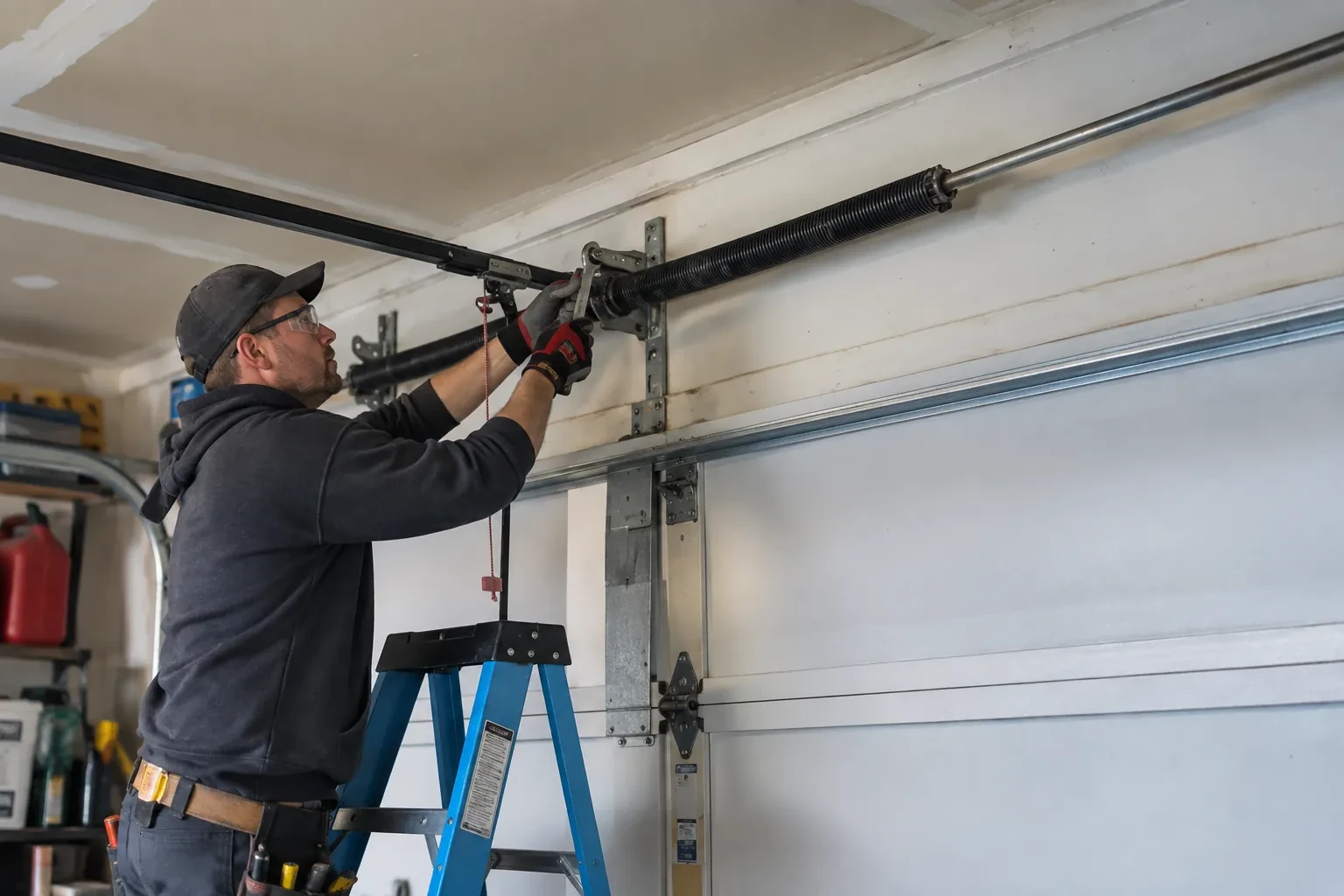
On a replacement, the old door is inspected before dismantling begins. Its spring type, cable routing, track attachments, opener connection and current balance show how stored energy and heavy sections must be controlled during removal. The installer records anything that will remain, such as a suitable operator or finished trim, and checks its compatibility with the proposed door. Access for carrying old sections out and bringing glazed ones in is also planned. This survey separates reusable site features from door components that belong to the retiring assembly.
Establishing square and stable tracks
Vertical tracks are positioned against the prepared jambs with the spacing required by the door system. The installer checks plumb, keeps paired sides aligned and uses the specified brackets and structural fasteners. Curved and horizontal sections follow, supported by rear hangers that are braced against side movement. Track joints are smoothed and fasteners set while adjustment remains possible. A level and diagonal measurements confirm geometry before the load is introduced, creating a stable path for the rollers rather than asking the moving door to correct a crooked installation.
Cleaning that respects every surface
Care starts with identifying whether the infill is glass, acrylic, polycarbonate, laminate or a mixture, since one cleaner is not suitable for every material. Loose dust, winter grit and salt are rinsed away before wiping. A soft cloth or sponge and the approved mild solution protect coatings, gaskets and aluminium finishes from abrasion. Cleaning is done with the door closed and controls secured against movement. The product care sheet stays nearby, giving future helpers the same material-specific guidance instead of relying on a general window routine.