Sound familiar?Beamsville
- The call
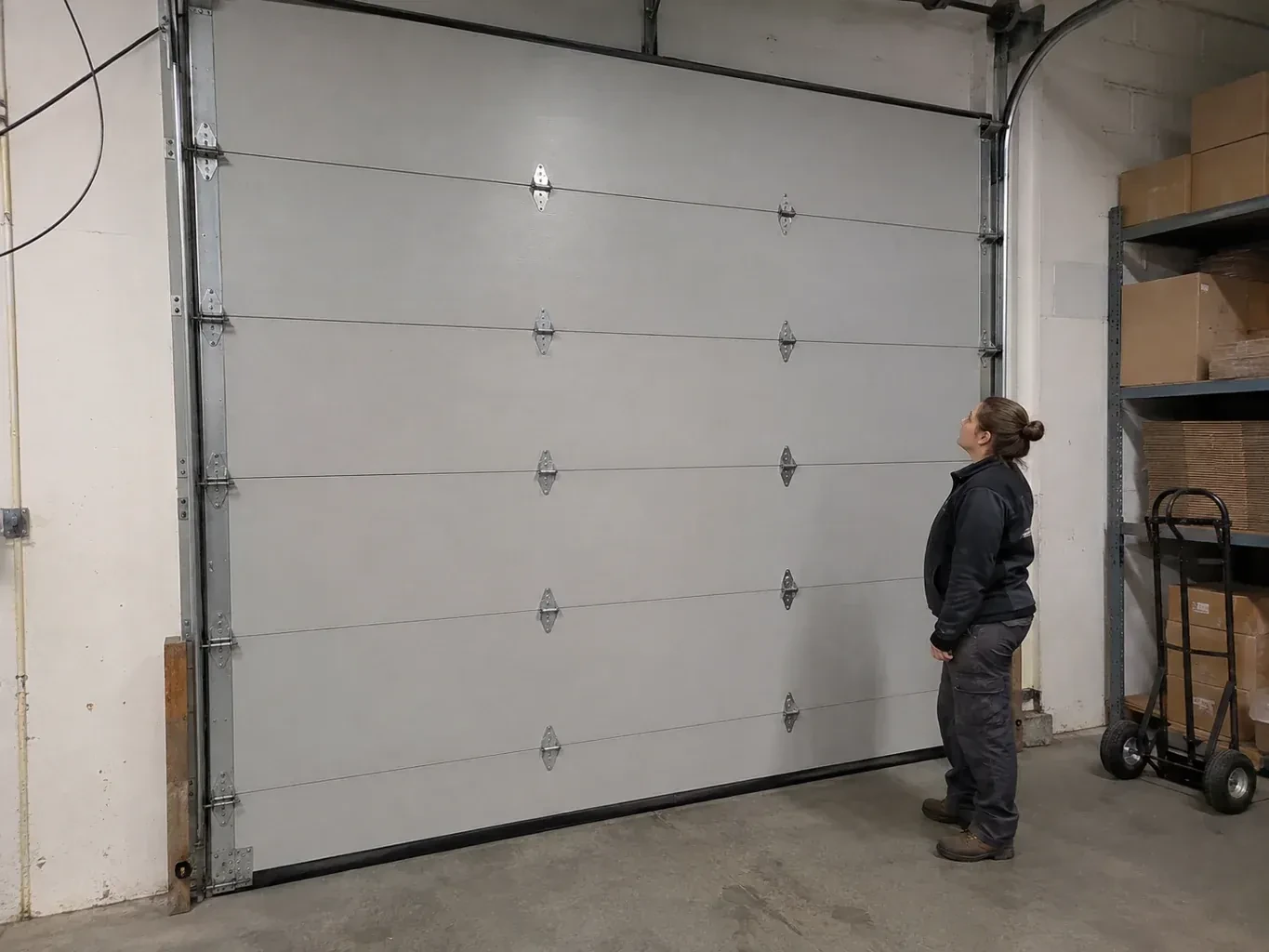
- A high-lift door begins smoothly, then a cable loses tension as the top sections change direction. The loose cable no longer follows its drum grooves evenly, leaving the door unreliable at the top of travel.
For a facility with several sectional doors, the repair visit can separate one isolated failure from wear shared across similar openings. Door identification, cycle demand and service history help explain why one bay developed loose hinges, tired rollers or spring imbalance first. The affected opening receives the defined repair, while comparable components on adjacent doors can be visually noted for planning. A clear service record then identifies what changed, which settings were tested and what routine observations facility staff can continue between visits.
Sound familiar?Beamsville
Commercial Sectional Door Repair · Beamsville
Scene 1
Noise is assessed by location, timing and character. A controlled cycle shows whether a knock occurs at a hinge, a roller entering the curved track, a bearing on the shaft or the operator drive. The technician watches for metal dust, polished rub marks, loose fasteners, roller play and track movement while listening. Door speed and vibration are compared through the vertical and horizontal portions of travel. This approach keeps several sounds from being treated as one problem and identifies the component producing each repeatable rattle, scrape or growl.
Scene 2
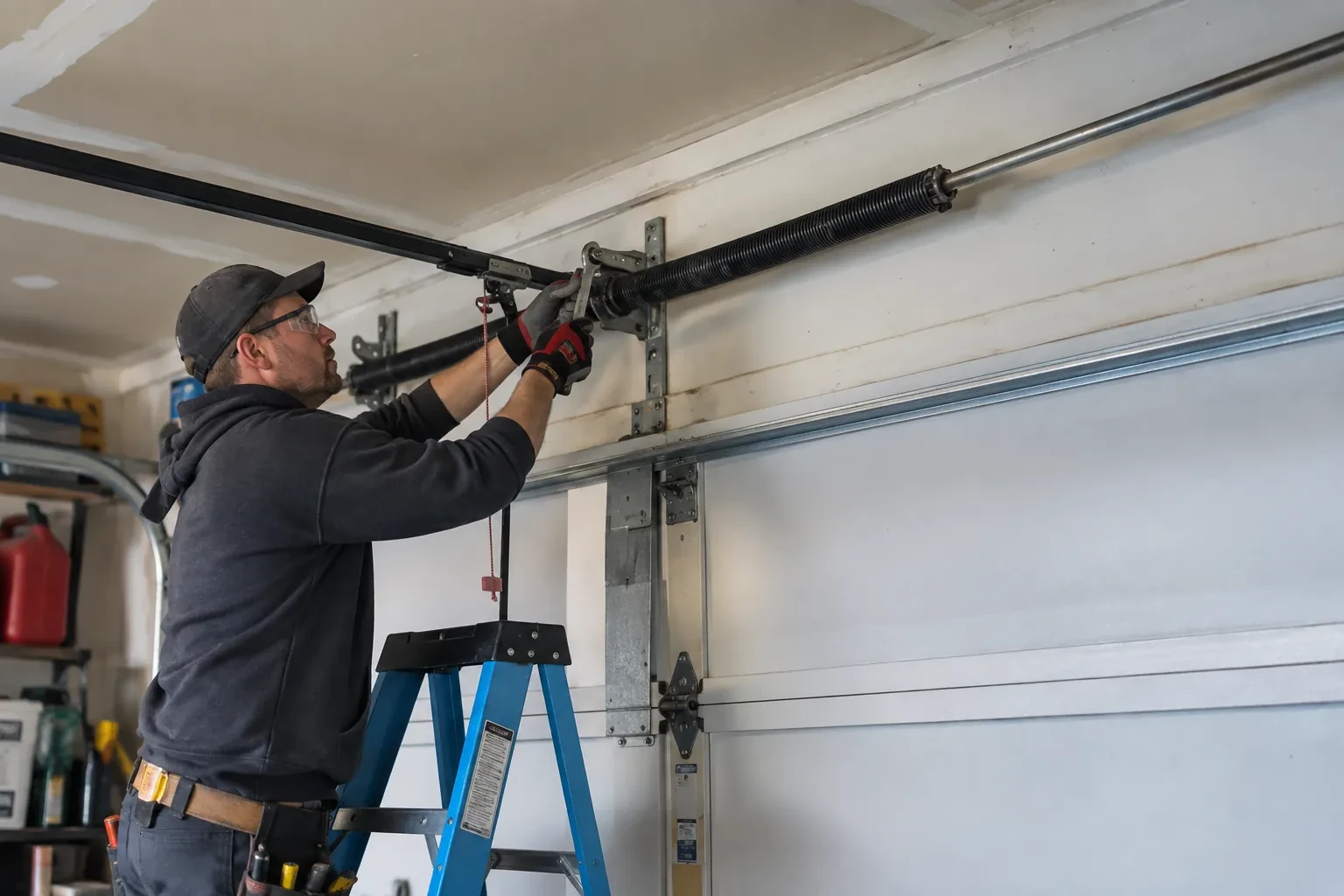
Cable and spring work is performed with the door secured and spring energy under deliberate control. Matched lift cables are routed from sound bottom fixtures to compatible drums, seated in their grooves and brought to equal tension. Bearings, shaft alignment and anchor points are checked before springs are set for the actual door weight and lift configuration. The technician then evaluates balance at several positions. A level bottom edge and stable movement show that both sides are sharing the load as intended rather than relying on the operator to pull the door straight.
Scene 3
Repair restores the equipment, while everyday habits help preserve it. Marked stand-off areas give vehicles room to clear the bottom section and vertical tracks. Loads are staged beyond the door path, control stations remain visible, and staff wait for the opening to reach its operating position before passing through. The threshold is kept free of packaging, ice and debris. When everyone knows which sound, movement or sensor indication to report, small changes are documented clearly and the door can be assessed with useful evidence rather than a vague description.
What shapes the quoteLincoln Door & Opener Co.
FeesSame any hour
Surface condition and remaining material determine the scope. Light contamination may be cleaned during maintenance, while pitted cables, weakened brackets, seized rollers or compromised fasteners are replaced with compatible components. The source of moisture is considered too. Clearing drainage, renewing seals and removing accumulated salt help protect the repaired lower section and its hardware.
The appropriate interval follows the door and operator manuals, operating cycles, environment and facility maintenance plan. A heavily used exterior bay may need attention more often than a lightly used interior opening. Staff can still observe cables, seals, sensors, sound and travel during normal operation, while tensioned components and adjustments remain part of a technician's planned inspection.
The mechanical door should be assessed before operator force, clutch or travel settings are changed. Extra resistance can come from spring imbalance, cable trouble, worn rollers, track contact or an engaged lock. Once the door moves freely and is correctly balanced, the operator can be set to that sound baseline and its limits and protective devices can be checked.
NiagaraOntario
Commercial Sectional Door Repair · Lincoln, Vineland, Campden, Wellandport
Every square is one home in a hundred.
On-site assessment
A forklift clipped the bottom panel while backing through the bay.
(289) 432-1344, open 24/7.
On-site assessment preferred · (289) 432-1344, open 24/7