Sound familiar?Lincoln
- The call
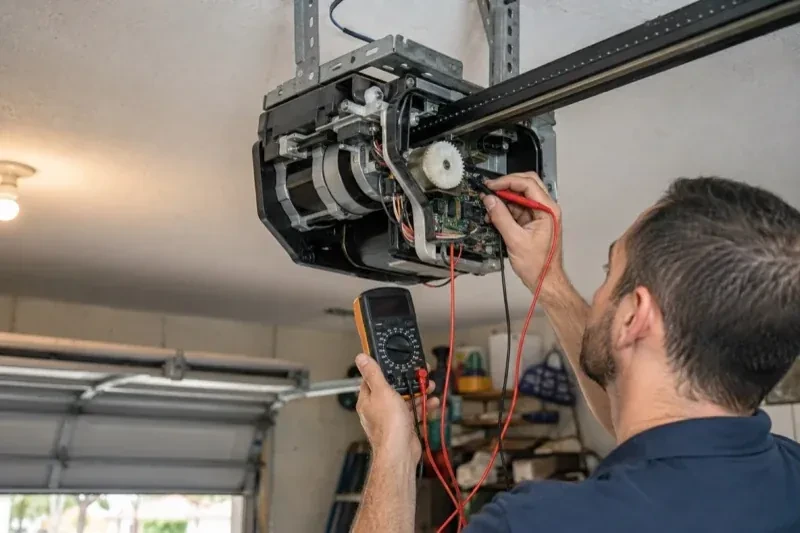
- There is a new squeal from the front of the rail, up near the header, on every cycle. The belt has started tracking to one side and its edge is fuzzy where it has been rubbing.
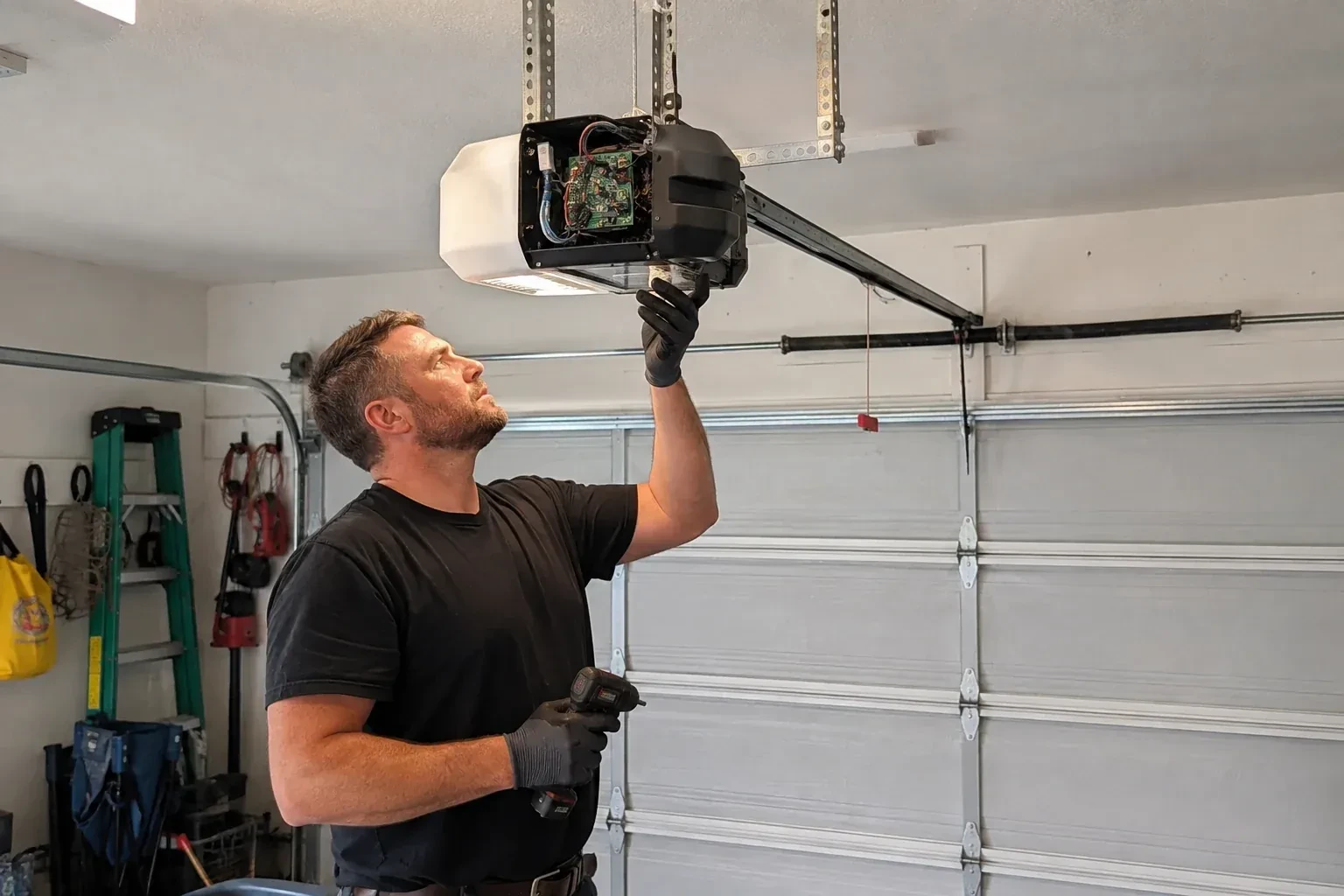
Press the remote and the motor runs its full cycle, lights on, the usual whir, but the door does not move a centimetre. Up at the trolley, the belt is hanging loose where a small plastic clip used to hold it.
A belt drive is chosen for its quiet, so one that has started to rattle is saying something specific. Sprocket noise usually means the belt is either too loose or too tight. A squeal from the front of the rail points to the idler pulley bearing. A clack at the same point in every cycle is a run of worn teeth or a rail joint out of line. A hum with no movement is a broken clip, a stripped gear or a belt off its sprocket. Repair means reading those sounds, confirming them by inspection and replacing the one component responsible, so the operator returns to its hush.
Sound familiar?Lincoln
Belt-Drive Opener Repair · Lincoln
Scene 1
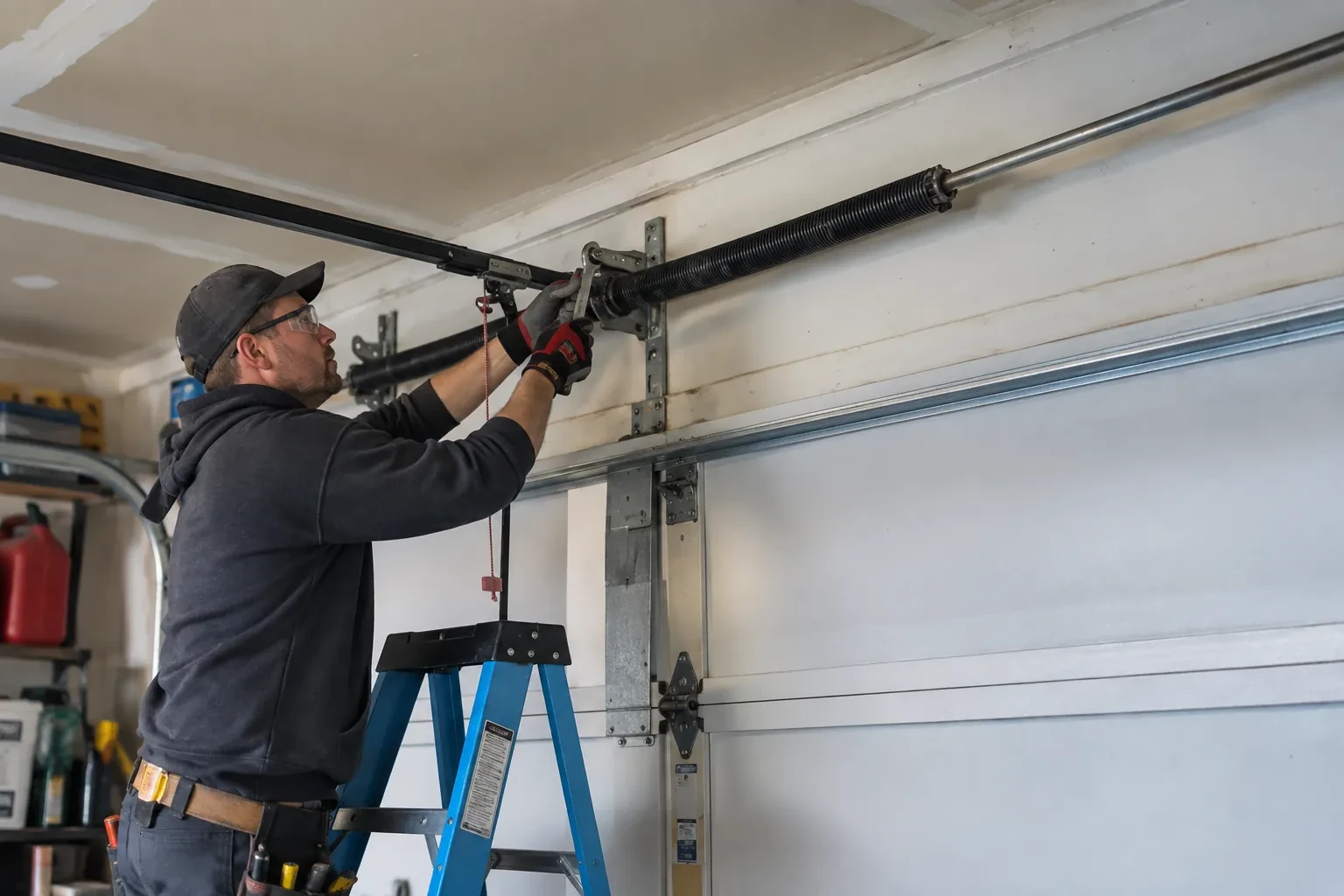
Nothing on the belt drive is judged until the door has been lifted by hand. The technician unplugs the operator, pulls the red cord to free the trolley and raises the door: it should rise with moderate effort, stay put about a metre off the floor and settle gently at the top. A belt is designed to guide a balanced door, not to lift a heavy one, so a door that sags or drops is loading the belt, trolley and sprocket far beyond their design. That is spring work, agreed as its own item before any belt is replaced, otherwise a new belt would simply wear out the way the old one did.
Scene 2
Any time the belt has been off the sprocket, the operator's sense of where the door is can drift from where the trolley actually sits, so this step is done before the door is reconnected. The technician lifts the belt clear of the sprocket, runs the operator until the sprocket turns to its closed position and stops on its own, then slides the trolley to the closed end of the rail and refits the belt. Motor and trolley now agree. On operators with a mechanical limit assembly, the middle contact is adjusted instead. Without this step, the door stops short at one end no matter how the travel limits are turned.
Scene 3
Before leaving, the technician writes down the operator's model and serial number, which belt or parts went in, the tension setting used and the date, and hangs the note with the manual near the wall control. You are shown what was replaced and why, and the old parts are yours to keep or are taken away. Keep the note; a belt has a service life measured in years and cycles, and knowing when this one went in tells the next technician where to look. Any settings the operator lost during the work, such as remotes or a keypad code, have been re-taught and tested with you.
What shapes the quoteLincoln Door & Opener Co.
FeesSame any hour
No, just different. The belt is lighter, runs dry and is replaced as one length with a clip, where a chain has links and takes grease. The tensioning at the trolley works the same way on both, and the sprocket, idler and trolley are similar parts. What a belt drive rewards is care with tension and a straight rail, because it is chosen for quiet and shows any fault as noise.
A tension adjustment with the safety tests is a short visit. Replacing the belt, trolley or idler pulley, then phasing the motor, relearning limits and running the reversal tests, is usually an hour or two. A gear-and-sprocket kit at the motor head takes longer because the head unit is opened. If the balance test turns up spring work, that is agreed as a separate job with its own time.
It can, if the door was open or out of balance when it was released. The release itself disconnects the trolley from the belt, so a falling door does not throw its weight onto the drive; the real risk is the door itself crashing down and damaging the tracks, hinges or panels. Nothing about the cord itself is harmful; it is designed to be used. The habit to keep is to release the door only when it is closed.
NiagaraOntario
Belt-Drive Opener Repair · Beamsville, Vineland, Campden, Wellandport
Every square is one home in a hundred.
On-site assessment
Press the remote and the motor runs its full cycle, lights on, the usual whir, but the door does not move a centimetre.
(289) 432-1344, open 24/7.
On-site assessment preferred · (289) 432-1344, open 24/7