Sound familiar?Lincoln
- The call
- You moved in three months ago. The door works, but nobody can say how old the springs are, when anyone last looked at it, or whether the little sensors by the floor have ever been tested.
Your toddler has discovered the wall button. You want to know, from someone who checks these things for a living, that the door will stop and reverse if a small person is under it.
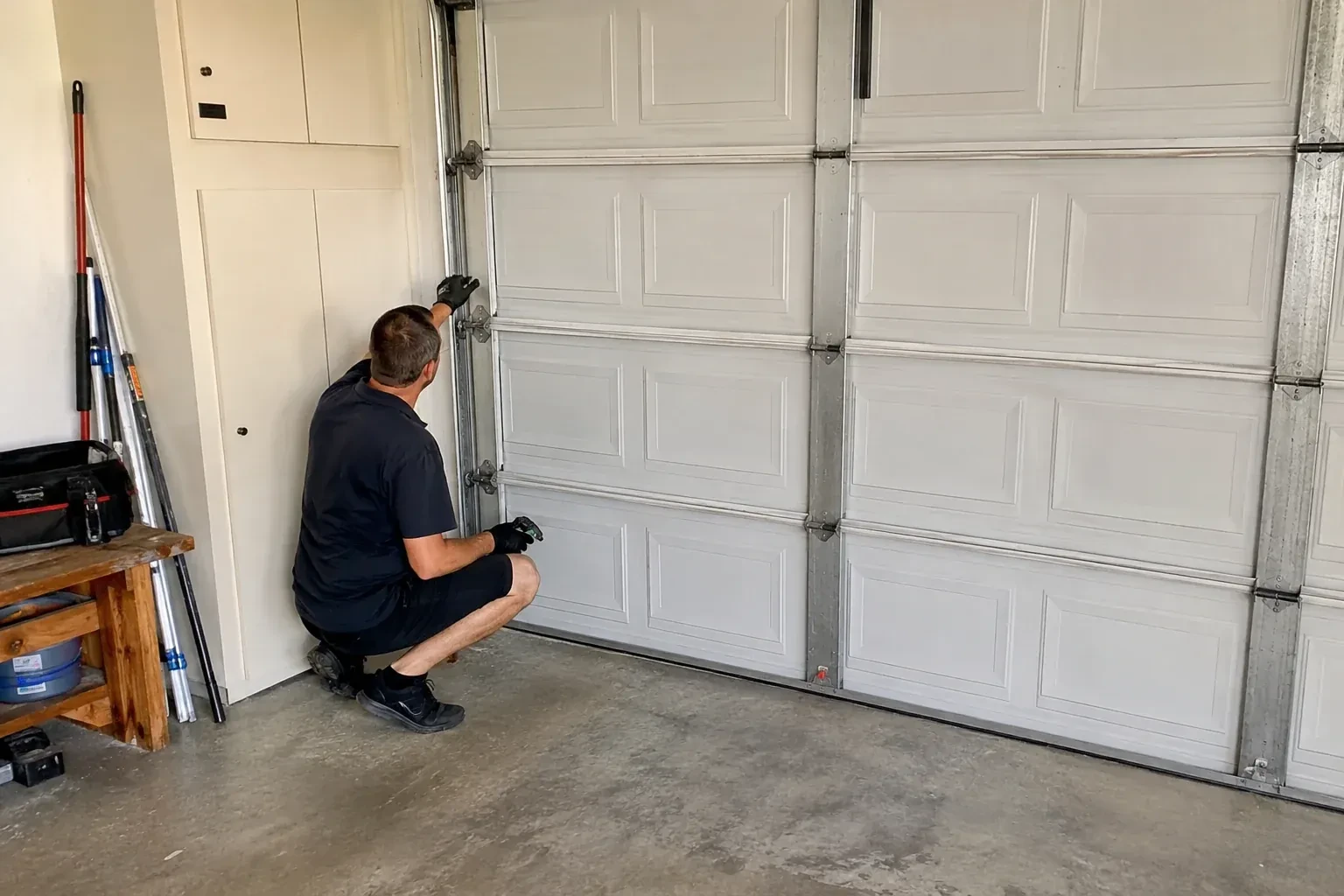
Three tests sit at the heart of the visit. The balance test, done with the opener disconnected, shows whether the springs are still carrying the door's weight or the motor is straining to do it. The contact-reversal test, a flat board laid on the floor, shows whether the door backs off when it meets something solid. The photo-eye test, breaking the beam while the door closes, shows whether the sensors stop it before contact. Each one takes a minute, each answers a different question, and together they tell you the door is doing what it was built to do.
Sound familiar?Lincoln
Garage Door Safety Inspection · Lincoln
Scene 1
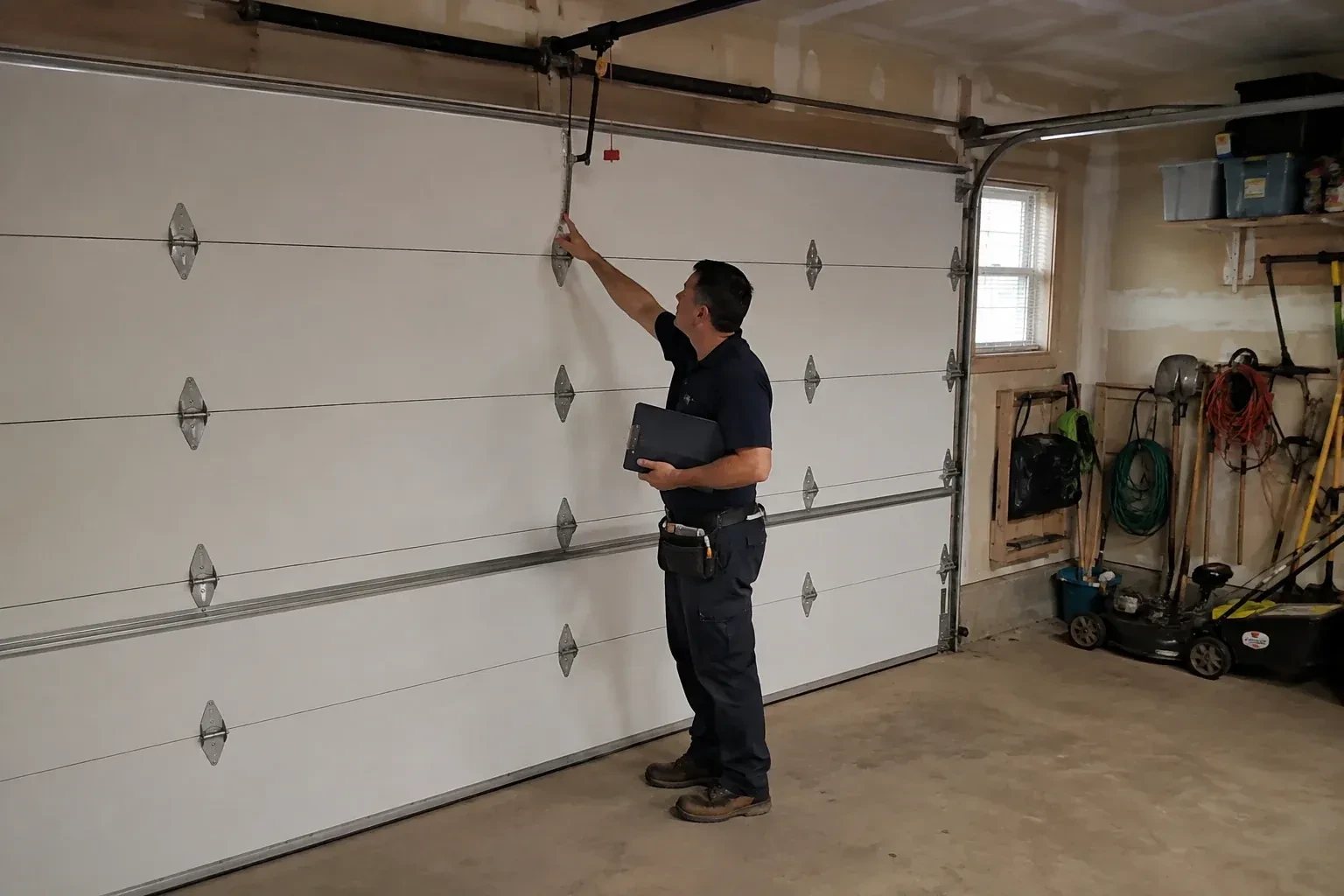
Turning to the opener, the technician checks that the motor head is secure on its hangers, the rail is straight and its header bracket firmly fixed, and the curved arm meets the door at a bracket that is bolted to a reinforced section rather than thin steel. The chain, belt or screw drive is looked at for slack or wear. The photo eyes are located, their height above the floor noted, their lenses and wiring checked, and the wall control, remotes, keypad and lock or vacation button are each identified so they can be tested in turn. This is also where the manual release cord and handle are confirmed to be within reach and in working order.
Scene 2
Before packing up, the technician walks you through what was found, in front of the door so each item can be pointed at. Findings are sorted into four groups: in good order, maintenance, planned repair, and stop-use. For each repair, you hear what the part does, why it matters and roughly what the work involves, so you can decide in your own time. If anything falls into the stop-use group, you are shown the reason and the door is left in a safe position with the opener disconnected until that item is corrected. The written record follows, with the model numbers, the measurements and the photographs.
Scene 3
Once the door has been checked and any maintenance done, take a moment to listen to it run a couple of times. That even, unremarkable sound from the floor to the top of travel is the baseline. From now on a new knock, a squeal at one height, a motor that labours for a second at the start, or a door that lands with a thud instead of settling is a change from that baseline, and a change is easier to describe on the phone than a vague sense that something is off. Many owners find that after one inspection they hear their door differently, and that awareness is worth as much as the report.
What shapes the quoteLincoln Door & Opener Co.
FeesSame any hour
Yes, plainly and at the door. A slack or frayed cable, a gap in a spring coil, a door hanging crooked, a bracket pulling out of the framing or an opener that fails the reversal test are the kinds of findings that put an item in the stop-use group. When that happens you see the reason yourself, the door is left resting in a safe spot with the opener unhooked, and the fix is written up and quoted so it can be booked.
A door that still runs after a bump can still be carrying the effects of it. The force travels from the dent into the roller, the track, the bottom bracket and the cable on that side, and any of them can be nudged enough to change how the door hangs. An inspection follows that path and tells you whether the mark is cosmetic, whether a part needs work, or whether the balance has shifted.
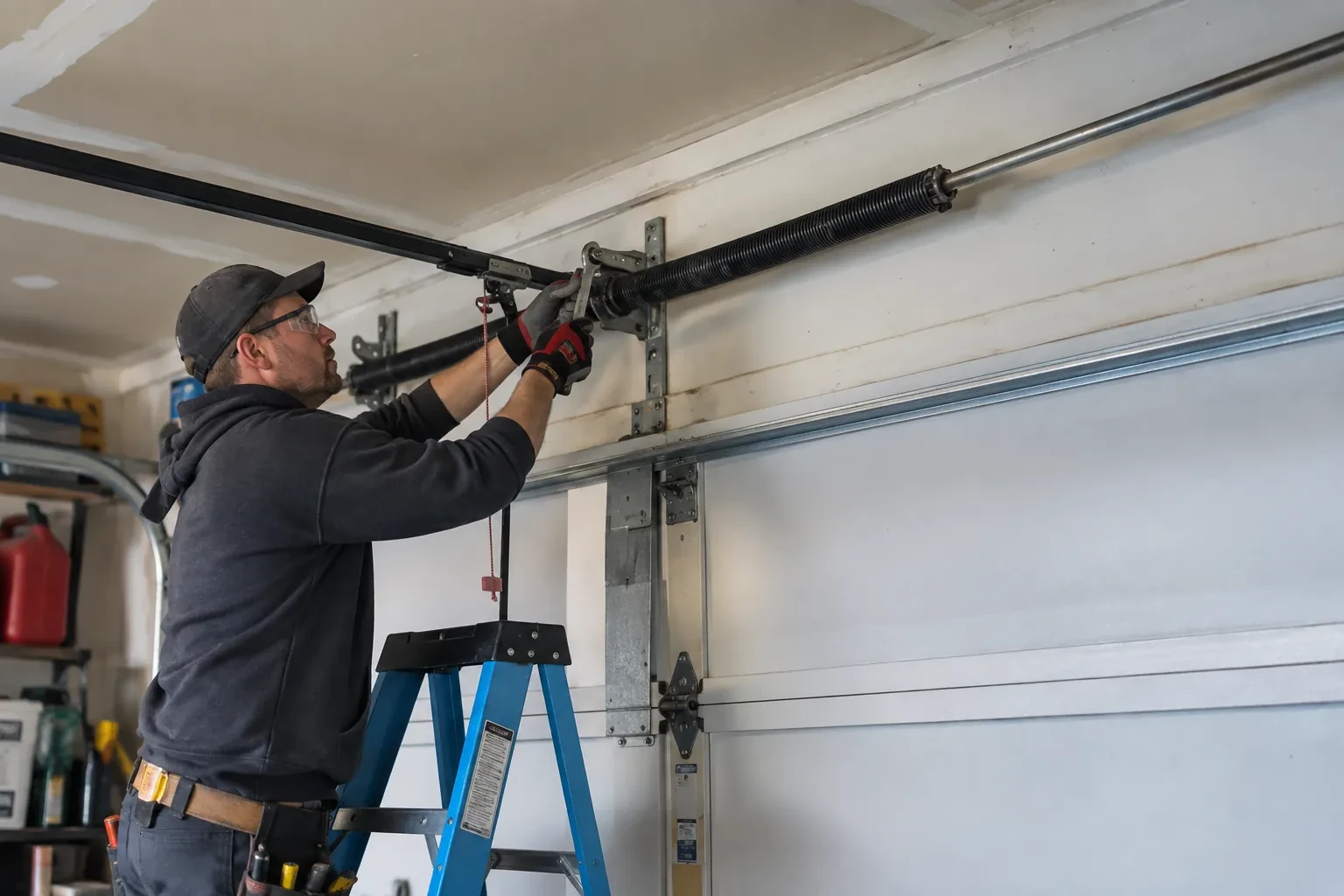
The three owner checks, yes: the manual balance test from the closed position, the board test for contact reversal and the photo-eye test with a broom handle through the beam. Industry guidance recommends all three monthly. What stays with a technician is anything that involves loosening, winding or unhooking springs, cables, drums or bottom brackets, and any adjustment to the opener's force settings.
NiagaraOntario
Garage Door Safety Inspection · Beamsville, Vineland, Campden, Wellandport
Every square is one home in a hundred.
On-site assessment
Your toddler has discovered the wall button.
(289) 432-1344, open 24/7.
On-site assessment preferred · (289) 432-1344, open 24/7