Sound familiar?Vineland
- The call
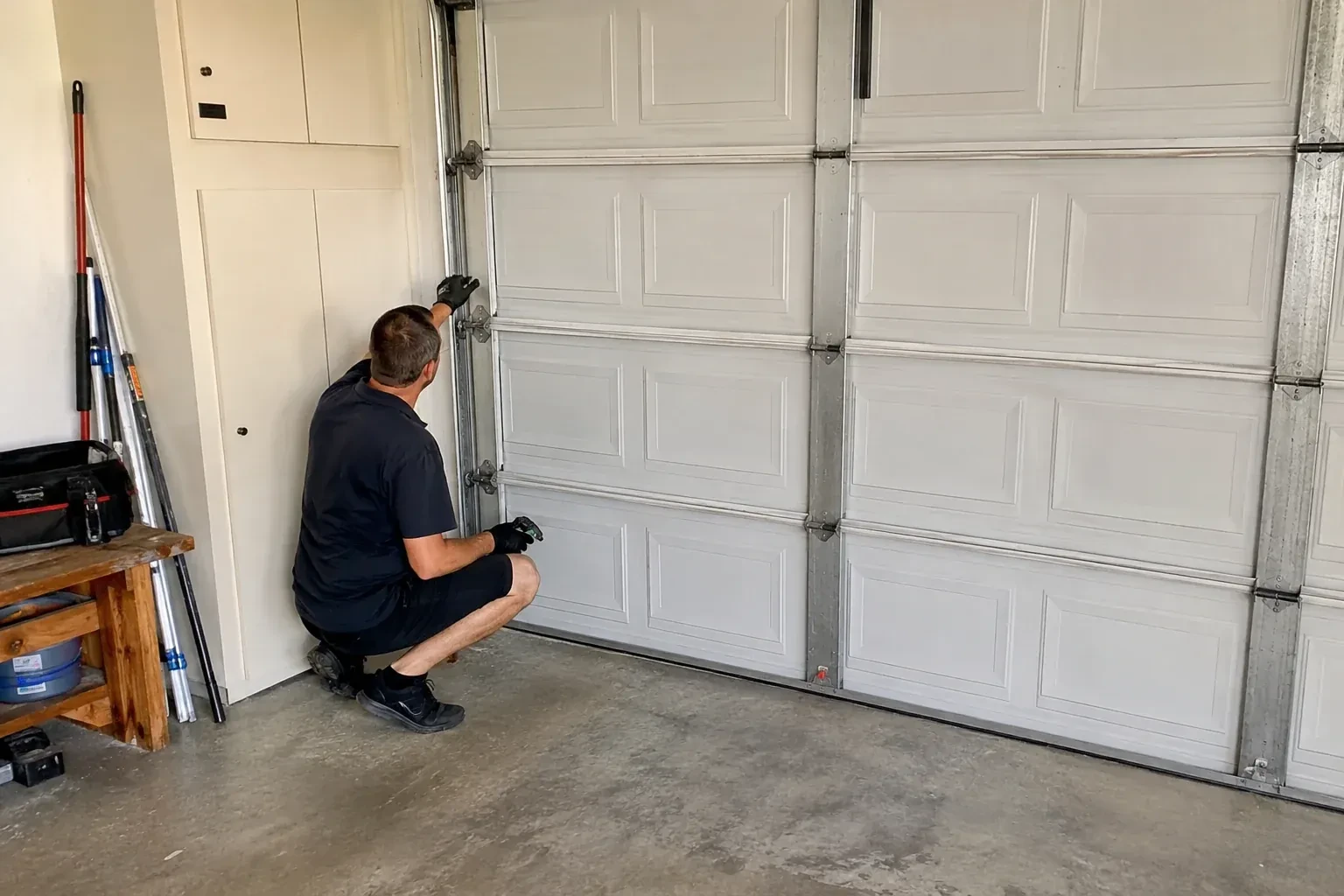
- One side of the door hangs a hand's width lower than the other. A steel cable is drooping in a loop beside the track instead of running tight to the drum, and the whole door looks tilted in the opening.
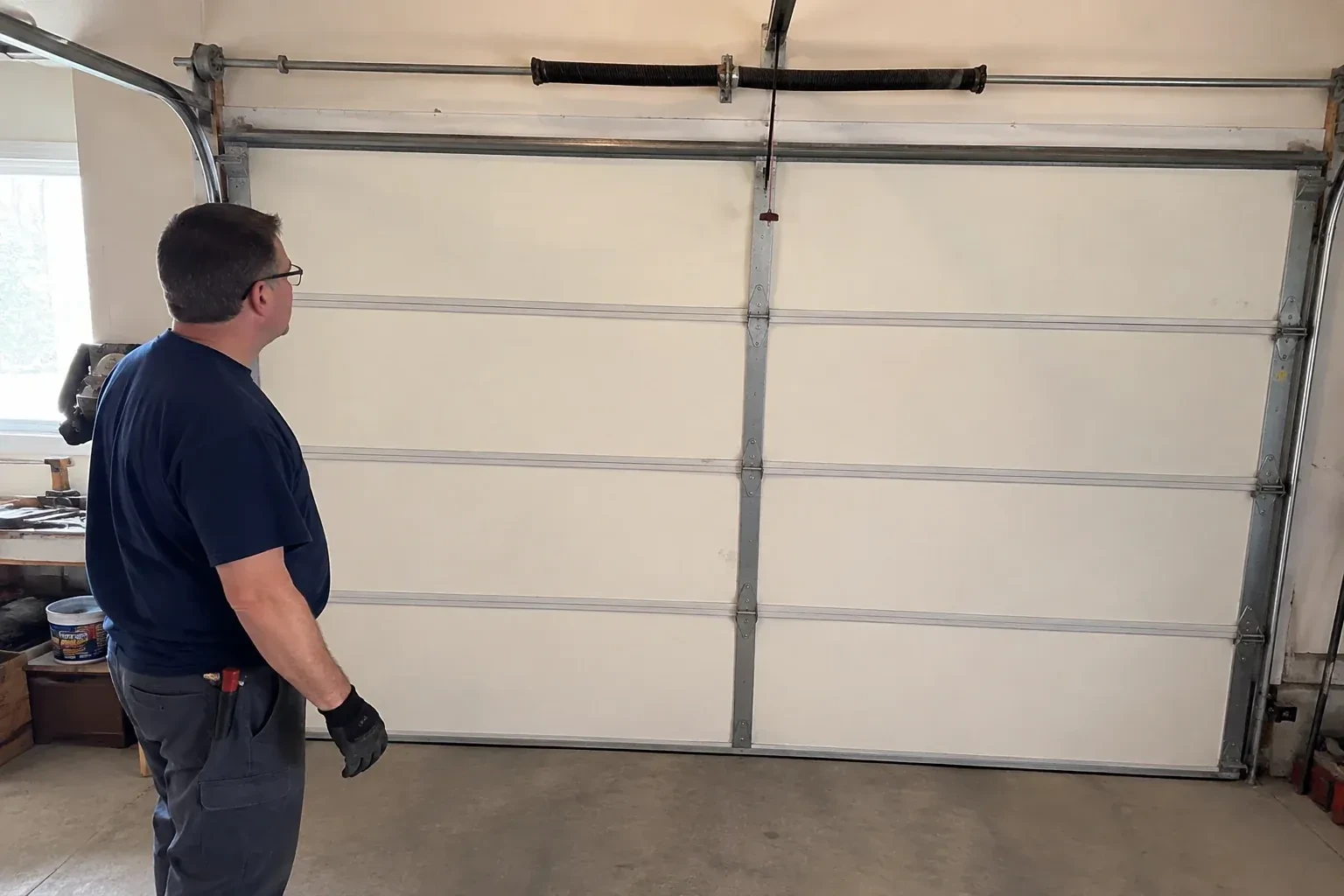
When one side of a door drops and the sections tilt, the lifting cables are usually involved. Each cable runs from a bottom bracket up to a drum on the torsion shaft, and both must stay taut and wound evenly for the door to rise level. A cable that frays, snaps or unwinds off its drum lets that side fall, and the rollers on the other side pop out as the door twists. The reset re-seats or replaces the cables as a matched pair, rewinds the springs to the door's weight and only then puts the rollers back, so the door rises straight rather than repeating the drop.
Sound familiar?Vineland
Off-Track Garage Door Reset · Vineland
Scene 1
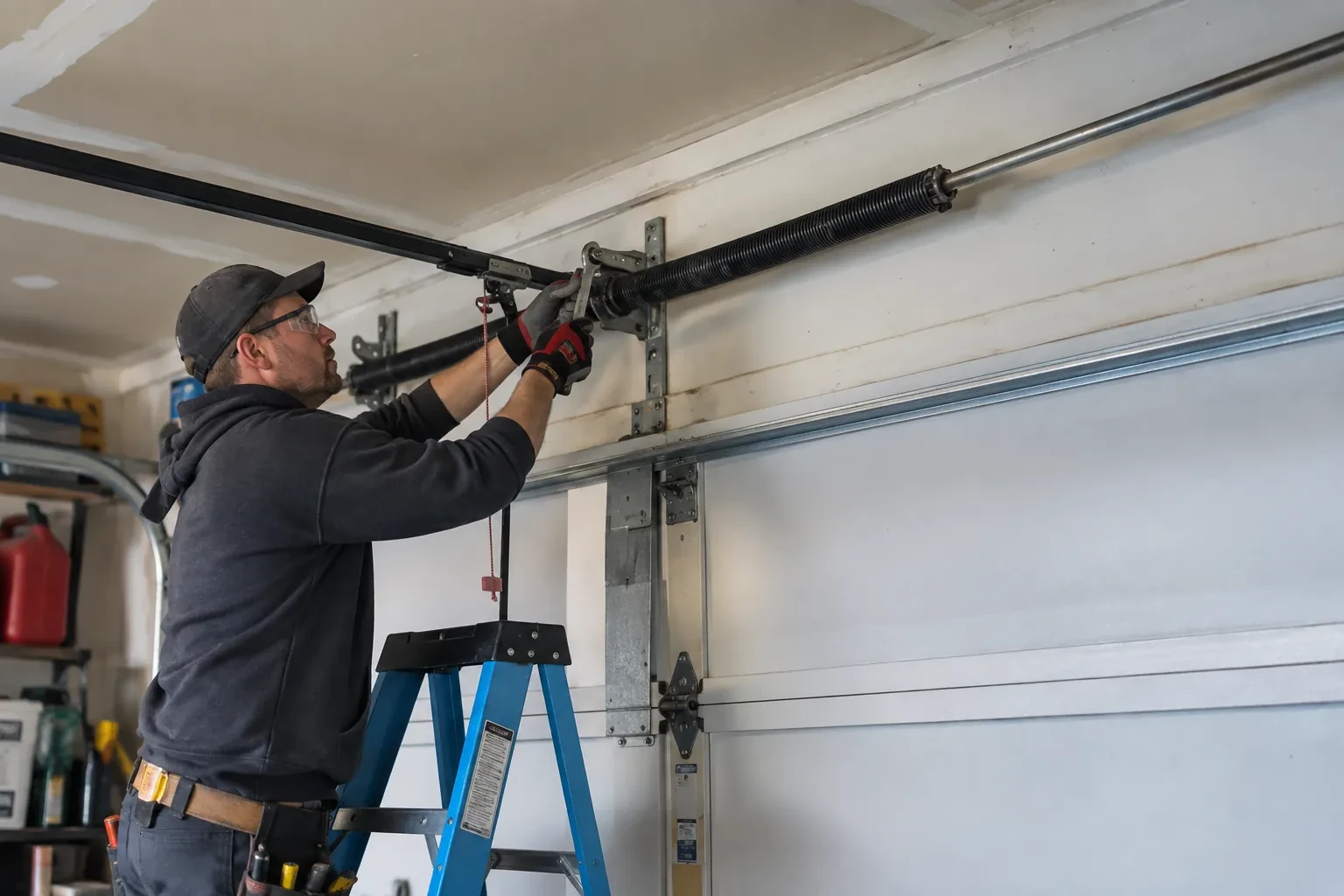
The rails are examined as a system. Is the vertical track plumb and spaced correctly to the door edge, or has it bowed away from the jamb? Are the jamb brackets and flag brackets tight, and are the lag screws biting into sound wood or spinning in split, dry framing? Is the horizontal track level or slightly rising toward the rear, and are the back hangs still firmly fixed to the ceiling joists? A rail that has been crushed or kinked by an impact is measured against the door's roller size, because a tight spot in the track will pop a roller again as soon as the door is run.
Scene 2
Before the opener comes back into the picture the door is proven manually. The clamps come off, the technician lifts the door slowly from the bottom, watching each roller pass through the curve and along the horizontal rail, and listening for any scrape that would mean a tight spot. At the halfway point the door is let go and should hold there with little drift. It is raised fully and must stay up. Then it is lowered and must close level along the floor. Any drag, sway or roller lift at this stage is fixed now, because the opener would only hide it until the next event.
Scene 3
Most impact-related off-track calls come from small nudges rather than collisions. Parking with the bumper a little further from the door, keeping bicycles, bins and hockey gear out of the door's path and never leaning long objects against the sections inside all remove the common triggers. Anything stored on the floor near the opening should sit clear of the space the door sweeps through and clear of the photo eyes. If the garage is tight, a simple stop on the floor or a hanging marker for the windscreen gives the driver a fixed reference and takes guesswork out of parking in the dark.
What shapes the quoteLincoln Door & Opener Co.
FeesSame any hour
The usual causes are an impact from a vehicle, a lifting cable that broke or slipped off its drum, ice holding the door to the floor while the opener pulled, an obstruction under the door, worn rollers that no longer hold in the rail, or track brackets that have loosened from the wall. Finding which one applies is the first part of the visit, because the reset is only durable once the cause is corrected.
Rollers turn thousands of times a year while carrying part of the door's weight, and their small ball bearings wear, fill with grit or fall out. Nylon tires can crack and steel wheels can wear flat spots or grind down to the stem. A worn roller squeals, wobbles in the rail or lets the door shudder at the curve. Replacing them as a set restores a quiet door and removes a common cause of a roller dropping out.
Yes, and in winter it is one of the most common causes. Meltwater under the bottom seal refreezes overnight and bonds the door to the slab. The opener pulls, the door stays put, the cables go slack and unwind off their drums, and when the ice lets go the door lurches up unevenly. Freeing the seal by hand before using the opener on icy mornings prevents almost all of these calls.
NiagaraOntario
Off-Track Garage Door Reset · Lincoln, Beamsville, Campden, Wellandport
Every square is one home in a hundred.
On-site assessment
The rollers on the door have been squealing for months.
(289) 432-1344, open 24/7.
On-site assessment preferred · (289) 432-1344, open 24/7